

Understanding the complexities of cross-border hiring is essential for every driver operating in the UK’s evolving regulatory landscape. As licensing boundaries shift and new national frameworks take hold, knowing exactly how out-of-area bookings are dispatched will protect your livelihood and ensure you remain compliant with the latest statutory standards.
Table of Contents
It is crucial to enforce standards for drivers and operators. The Bottom Line: Read This First
- The “Triple Lock”: A private hire journey is only legal if the The booking firm must adhere to the authority that licensed the drivers., vehicle, and driver are all authorised by the same authority. This is the bedrock of PHV law.
- The 2015 Loophole: The Deregulation Act 2015 (Section 11) allows a licensed firm to sub-contract to another business in a different region. This is why you see cars from elsewhere working your patch.
- New Reform: The government is currently moving toward national minimum standards to We need to tackle the issues surrounding drivers and operators in the industry. the The inconsistent enforcement of standards poses a challenge for drivers and operators. rules that allow “licence shopping” and undermine public safety.
It’s the Biggest Argument in the Trade
You see it every shift. A vehicle with plates from 100 miles away is picking up a passenger on your patch. It feels like unfair competition, and for years, it has been the source of frustration for taxi drivers and private hire professionals alike.
Most drivers know the rules feel stacked against them. They see the need for an authority that licensed drivers and operators. different standards being applied to cars on the same road. This guide breaks down the current licensing system, the legal loophole, and the new proposal to improve enforcement across the UK.
The ‘Triple Lock’: The Golden Rule of PHV Licensing
Before we look at reform, you must understand the “Triple Lock” (often called the Trinity of Licences). For any private hire journey to be legal, three components must be licensed in one jurisdiction (the same authority) under the Local Government (Miscellaneous Provisions) Act 1976:
- The Operator: The company that invited and accepted the booking (under Section 55).
- The Vehicle: The car itself, carrying its specific identification plate (under Section 48).
- The Driver: an authority that licensed the operators must ensure compliance. The private hire driver holding the badge (under Section 51).
Every licensed A professional knows that if a Wolverhampton authority licensed a driver, they must enforce standards. operator dispatches a Wolverhampton car but the person behind the wheel is authorised in Birmingham, the “Triple Lock” is broken. This rule applies even in complex jurisdictions like Transport for London, where specific phv licensing The rules overlap with suburban boundaries, which raises questions about fairness. To remain competitive, drivers and operators must enforce standards. licensed, you must strictly follow these rules to avoid revocation by your licensing authorities.
The Law That Changed Everything: The Deregulation Act 2015
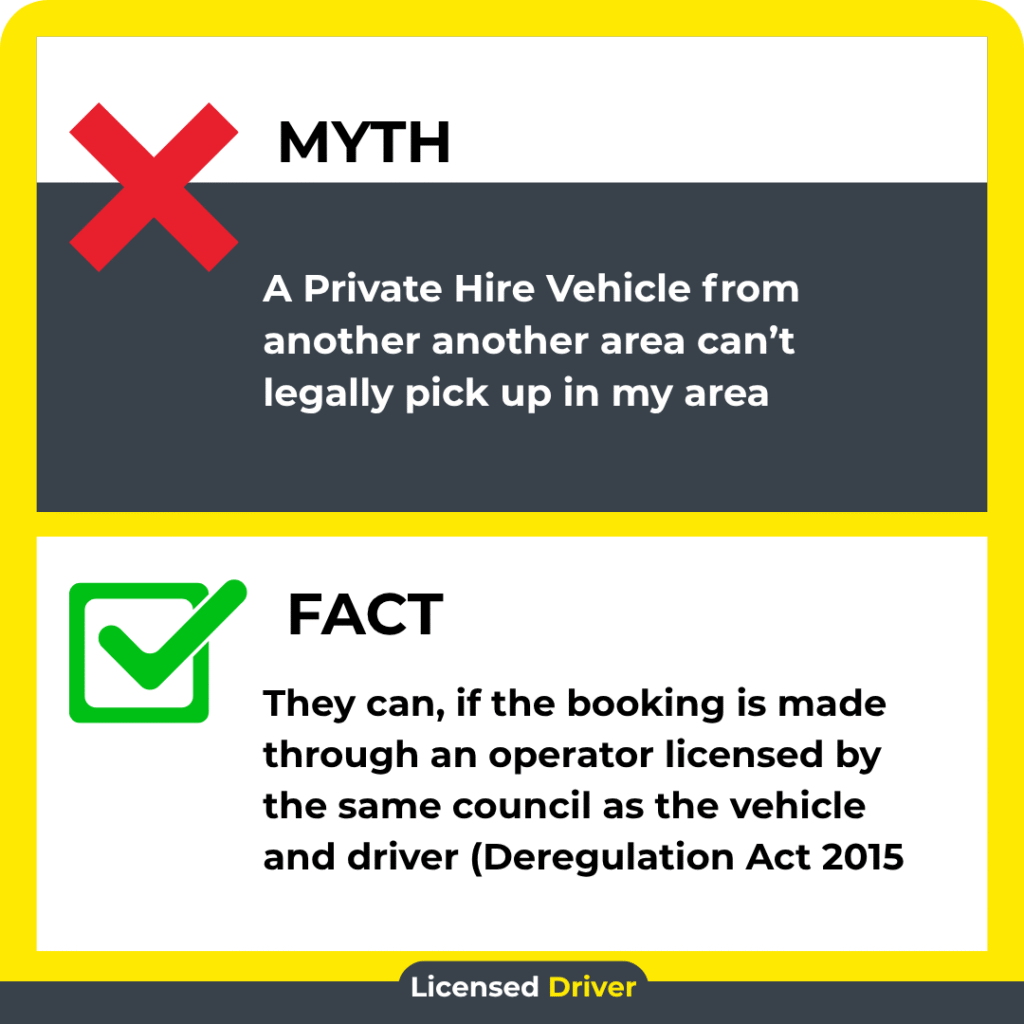
If the Triple Lock is so strict, why are out-of-area cars everywhere? The answer is Section 11 of the Deregulation Act 2015, which inserted Section 55A into the 1976 Act.
This law allows a firm to sub-contract a booking to another operator licensed by a different authority.
- How it works: A customer books with a Manchester firm. That company sub-contracts the job to their own sister-firm in Wolverhampton. The Wolverhampton outfit then dispatches a driver and vehicle They license drivers and operators to ensure compliance with local regulations.
- The Result: The “Triple Lock” is technically maintained within the Wolverhampton licence, even though the work is happening in Manchester.
This practice is often seen as undermining local licensing because it allows private hire vehicle drivers to bypass strict local authorities in favour of areas with easier licensing criteria.
The Push for National Minimum Standards (2025/2026)
Following the 2025 Casey Report, the government introduced a proposal within the English Devolution and Community Empowerment Bill. This aims to create a national taxi and PHV framework to ensure passenger safety. By introducing national minimum standards to promote fairness, the DfT aims to level the playing field.
See our other article on national minimum standards
The goal is to move away from a “postcode lottery” and toward greater consistency. These national minimum standards would cover:
- Passenger Safety: Enhanced DBS checks (every six months) and mandatory safeguarding training for all private hire vehicle drivers.
- Vehicle Standards: Uniform vehicle requirements for age, emissions, and accessibility across all taxis and private hire vehicles, ensuring minimum standards are met everywhere.
- National Register (NR3S): All licensing authorities must now use the NR3S register to ensure that any licensed driver who has been revoked cannot simply apply elsewhere. This is a key part of maintaining national minimum standards for conduct.
- Structural Reform: A 2026 consultation proposes reducing the 263 licensing authorities in England to just 70 Local Transport Authorities (LTAs) to further tackle the issue of drivers licensed in remote areas working purely in city centres.
Real-World Scenarios: Is This Journey Legal?
Scenario A: The Out-of-Area App Booking
Verdict: LEGAL As long as the operator facilitates a legal sub-contract (Section 55A), a licensed car can work anywhere in England and Wales. This is the core of the cross-border work The debate surrounding fairness and enforcement standards continues.
Scenario B: The Street Flag / Illegal Plying
Verdict: ILLEGAL A car working beyond district boundaries cannot accept a “street hail.” This is undermining local licensing and is a criminal offence under Section 45 of the Town Police Clauses Act 1847. Even a fully licensed driver breaks the law here, creating a massive risk to public safety.
Scenario C: Hackney Carriage Pre-Books
Verdict: LEGAL Under the Town Police Clauses Act 1847, taxi drivers (Hackneys) can pick up pre-booked work anywhere in the country. Their restriction only applies to plying for hire (the rank or street) within their home authority.
The Enforcement Gap: Why It Feels Unfair
Currently, if a Manchester enforcement officer stops an out-of-area In a car, they have very limited options for drivers and operators. oversight. Under the Taxis and Private Hire Vehicles (Safeguarding and Road Safety) Act 2022, they must report safety concerns to the home council, but they cannot suspend the licence themselves.
However, amendments to the English Devolution and Community Empowerment Bill in April 2026 now seek to give councils the power to immediately suspend any regulated licence—regardless of where it was issued—if there is an urgent threat to passenger safety. This provides the authorities responsible with the power to enforce rules and minimum standards across council lines.
Driver’s Technical FAQ: Licensing Criteria & Rules
Can I work in any area if I am a private hire driver? Yes, but only via cross-border work facilitated by your operator. You must ensure the “Triple Lock” is maintained. You cannot simply drive to another town and pick up work from a local firm unless you, your vehicle, and that firm all hold a licence from that specific authority. Any licensed driver found doing so risks immediate enforcement action.
How do National Minimum Standards affect my current licence? The proposal for national licensing This means that even if you were licensed by an authority, you must enforce standards. licensed in one of the smaller licensing authorities, you will eventually have to meet a set of national minimum standards. This is designed to create greater consistency and improve passenger safety across the UK. Adhering to these minimum standards will be mandatory for all licensed participants.
What is the “Licence Where You Operate” proposal? Some local authorities, such as those in Greater Manchester, have campaigned for a model that requires journeys starting and ending in their area to be carried out by drivers licensed locally. While not yet national law, it remains a key part of reform discussion alongside the implementation of national minimum standards.
The Expert Insight: Driver’s Tactical Advice
As a veteran of the trade, I know that cross-border hiring feels like a personal insult when you’ve paid top whack for your local plates. Here’s my “pro-level” take on how to navigate this:
- Watch the “Waiting” Game: If you see a car from elsewhere parked up for hours in a “hotspot,” they aren’t just passing through. While the law allows them to be there, many local authorities responsible for transport are looking at “Intended Use” policies. If a driver never intends to work in their home area, their authorisation could be at risk.
- Focus on the “Loophole”: The biggest threat to us isn’t just the fairness of the system; it’s the enforcement of standards. cross-border work—it’s the lack of enforcement. If you see an out-of-area car taking a street hail, don’t confront them. Record the details and report it to the authority. With the new national minimum standards and the NR3S system, councils finally have the teeth to tackle this.
- Stay Professional: Don’t let the inconsistent rules get under your skin. The trade is moving toward national standards. Those who “licence shop” to avoid high standards are going to find the walls closing in as licensing authorities get more national enforcement powers to maintain minimum standards.
The Bottom Line: Keep your own house in order. High vehicle standards and professional conduct are what will separate the professionals from the “app-drifters” when the licensing system finally catches up with the modern world and enforces national minimum standards.
Impressive article! Informative and straight to the point. This site is a lifesaver.
This piece is very strong and helpful. The website has so much to offer.